A plain-English guide for business owners who are new to AI tools
Spend enough time around AI and you'll start hearing people talk about prompts as if they're some kind of secret formula.
They're not.
In fact, a prompt is probably a lot simpler than most people think.
A prompt is just an instruction. It's the information you give an AI tool to tell it what you want. Whether you're using ChatGPT, Claude, Gemini, or something else, the process is essentially the same. You ask for something, and the tool responds.
The reason prompts have become such a popular topic is because people quickly discover that the quality of the response depends heavily on the quality of the instruction.
Think about it this way. If you walked up to a new employee and said, "Handle the customer," they're probably going to have a few questions. Which customer? What's the issue? What outcome are we looking for?
Now imagine saying, "Call the customer who left a voicemail this morning, apologize for the shipping delay, and let them know their order will arrive tomorrow."
That's a completely different level of instruction.
AI works the same way.
One of the biggest mistakes people make when they first start using AI is being too vague. They'll type something like "write an email" or "help me with marketing" and then wonder why the response feels generic. The reality is that the tool can only work with the information it's given.
The good news is that writing a better prompt doesn't require any technical expertise. You don't need to learn coding. You don't need to take a course on prompt engineering. You simply need to provide more context.
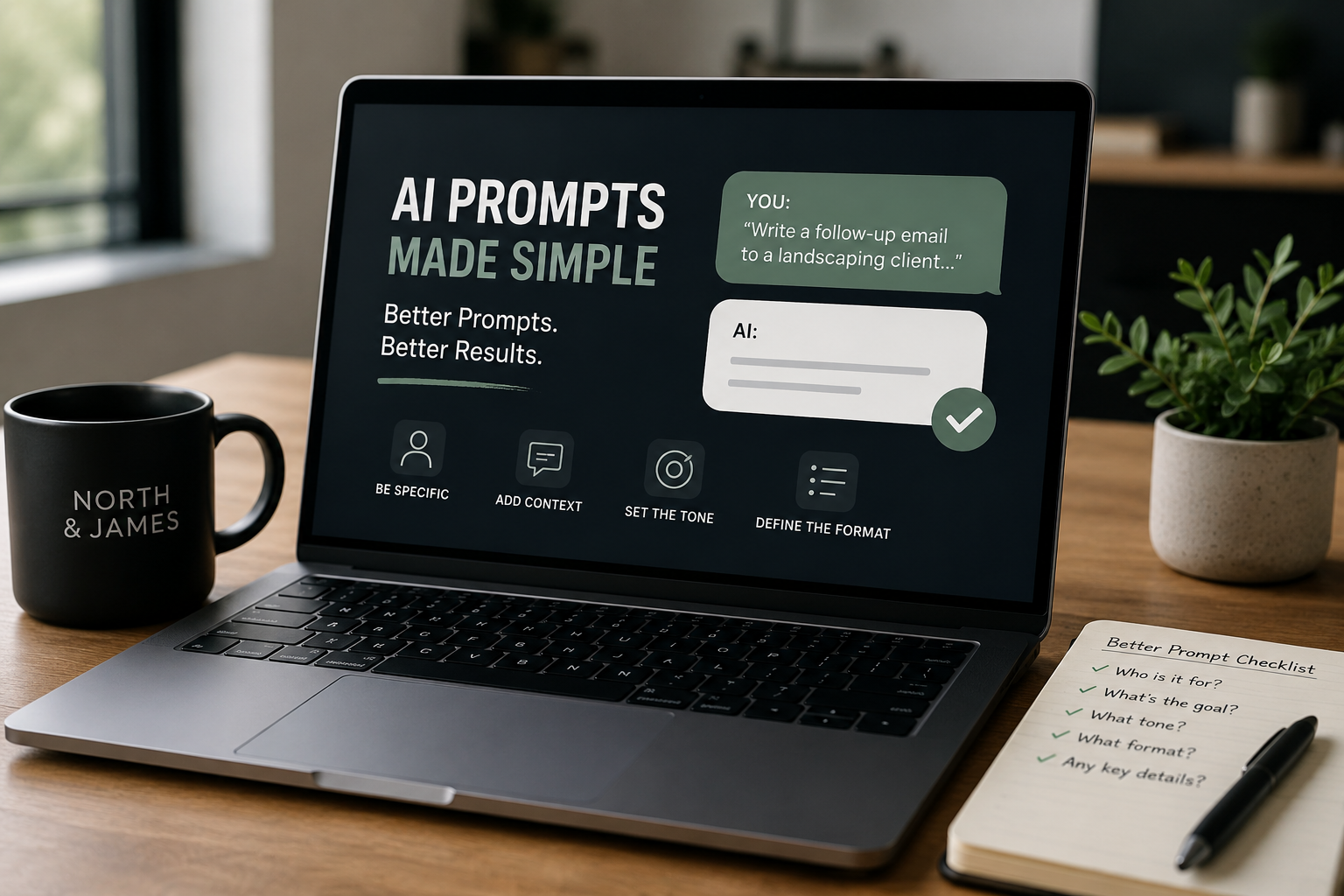
Who are you talking to? What are you trying to accomplish? What tone are you looking for? How long should the response be? What information does the tool need to know before it starts?
Those few extra details can dramatically improve the quality of the result.
For example, there's a big difference between asking AI to "write a follow-up email" and asking it to "write a short, friendly follow-up email to a landscaping client I met with last week who was interested in seasonal lawn maintenance packages. Keep it under 100 words and avoid sounding pushy."
The second prompt takes maybe twenty seconds longer to write. The response is usually ten times more useful.
Another thing that surprises people is that you don't have to get it perfect the first time.
The best way to think about AI is as a conversation, not a search engine.
If the response is too formal, tell it to loosen up. If it's too long, ask for a shorter version. If it missed something important, explain what it missed and try again. The people who get the most value from AI aren't necessarily the people who write perfect prompts. They're the people who get comfortable refining their instructions until they get the result they're looking for.
At the end of the day, a prompt is just an instruction. The better the instruction, the better the result.
That's not really an AI skill. It's a communication skill. Most business owners, managers, and professionals already use it every day when they work with employees, vendors, and customers.
AI just gives you another place to apply it.
30 minutes. No pressure. Just an honest conversation about where AI can help your business.